Swiss Credit Cards Without Foreign Transaction Fees: 2026 Comparison
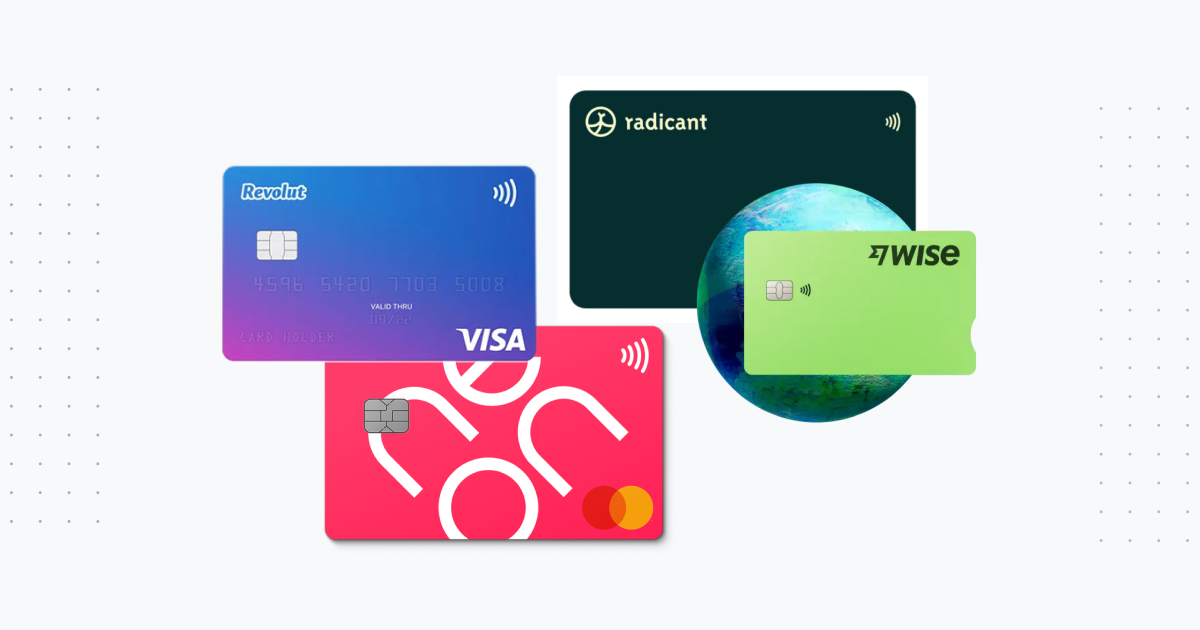
Looking for a Swiss credit card without foreign transaction fees? The Swisscard Visa and the Migros Cumulus Visa don’t charge a separate fee. That doesn’t make paying abroad free, though, because the cost is built into the exchange rate. In this article, we’ll look at which credit and debit cards let you pay and withdraw cash abroad cheaply.
You don’t even have to travel for this. Online shops like Amazon.de charge in euros, and even if you pay in francs, foreign fees can apply when the company is based abroad.
In short:
- Real credit card without annual fee: Swisscard Visa. It was cheaper than Cumulus in Moneyland’s euro sample. The Cumulus Visa comes with points instead, plus two cash withdrawals per year up to CHF 500 each without a withdrawal fee.
- Debit card with a Swiss account: Bank WIR top if you meet one of the conditions, otherwise Neon.
- Travel account on the side: Revolut if you pay on weekdays and stay within the allowance. Wise if you deal with several currencies.
Overview: cards for payments abroad
As of 14 September 2026. You’ll find the sources further down with each provider.
| Card | Plan and card costs | Card payment in foreign currency | Cash abroad | | --- | --- | --- | --- | | Swisscard Visa (credit card) | CHF 0 | No separate fee, Swisscard’s rate | 4%, min. CHF 10 | | Migros Cumulus Visa (credit card) | CHF 0 | No separate fee, Migros Bank’s rate | 2 withdrawals/year up to CHF 500 each free, then 2.5%, min. CHF 10 | | Bank WIR top (Debit Mastercard) | CHF 0 if conditions are met | Interbank rate without a markup, no commission | 24 withdrawals/year free, then CHF 2 | | Neon (Debit Mastercard) | CHF 0–150/year; first card CHF 20 for free/plus | 0.35% on Mastercard rate (free), 0% from plus | 1.5% plus 0.35% (free) to 0% Neon fee (metal) | | Revolut Standard (debit card) | No subscription; card delivery may cost extra | At Revolut’s rate: weekdays CHF 1,250/month without a separate fee, then 1%; weekends 1% | CHF 200 or 5 withdrawals per rolling month free, then 2%, min. CHF 1 | | Wise (debit card) | No subscription; physical card CHF 8 | Mid-market rate plus fee from 0.19%, depending on currency | CHF 230 per calendar month free, then 2.69% on the excess |
The cash column only shows withdrawal fees. Currency conversion costs and ATM operator fees can come on top. For Neon free, the exchange surcharge is already listed. What card orders, renewals and monthly plans cost is covered in each provider’s section.
Radicant isn’t on the list because the bank is being wound down. More on that below.
Credit card without foreign currency fee: is the exchange really free?
“0% foreign currency fee” doesn’t mean paying abroad is free. These are the three types of cost to look out for:
- Card or plan fee: annual fee, subscription or the cost of the card.
- Separate transaction fee: a percentage added on top of the converted amount. This is exactly the fee Swisscard and Cumulus don’t charge.
- Cost inside the exchange rate: the card issuer decides which rate it uses. If that rate is worse than the interbank or mid-market rate, you pay the difference, even without a separate fee.
That’s why below I don’t just look at the fees, but also at which rate is used for the conversion.
Swisscard Visa: credit card without a separate foreign fee
No separate fee (Swisscard's rate)
4%, min. CHF 10 per withdrawal
Special Features
No annual fee
No separate fee for foreign currency or foreign transactions
Real credit card with monthly billing
This is the swisscard credit card, a Visa card with monthly billing. Don’t confuse it with the Swisscard Cashback Cards Visa or other Swisscard products. According to the product page, the card has no annual fee, and Swisscard charges no separate fee for foreign currency or foreign transactions.
Swisscard sets the exchange rate itself, though (rate methodology), and that’s where the cost is. Moneyland measured an average EUR/CHF markup of 1.838% (Moneyland, retrieved 14 September 2026). That’s an average; the actual rate changes daily.
Disadvantages of the Swisscard Visa
Don’t use it for cash. According to Moneyland, a withdrawal costs 4%, at least CHF 10, abroad as well. This figure comes from Moneyland, not directly from Swisscard.
Migros Cumulus Visa: exchange rate, points and cash withdrawals
No separate fee (Migros Bank's rate)
2 withdrawals/year up to CHF 500 each free, then 2.5%, min. CHF 10
Special Features
No annual fee
Free supplementary card
No separate foreign currency fee
Real credit card (not a debit card)
Cumulus points on every purchase
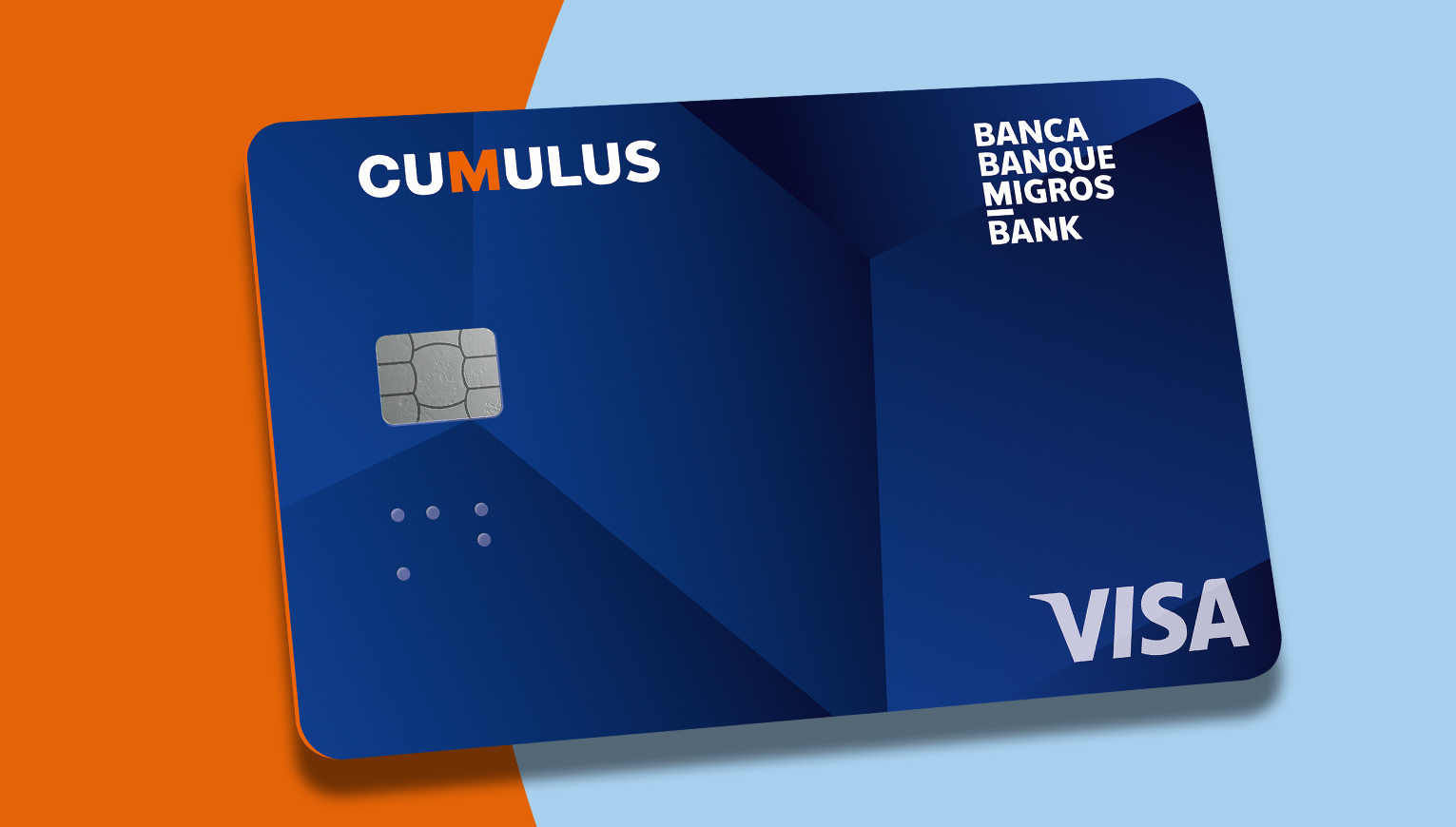
The Cumulus Visa also has no annual fee, the supplementary card is free and there’s no separate foreign currency fee. Migros Bank sets the exchange rate itself every day (Migros Bank FAQ, in German).
Cumulus has an advantage with cash: two withdrawals abroad per year are exempt from the withdrawal fee up to CHF 500 equivalent each. After that, a withdrawal costs 2.5%, at least CHF 10 (fee schedule, version 04/2025, in German). You still pay the markup in the exchange rate on those two withdrawals, though.
Disadvantages of the Migros Cumulus Visa
“No foreign currency fee” is true, but only half the story. Moneyland measured an average EUR/CHF markup of 3.128% (Moneyland). In this euro sample, that made Cumulus more expensive than Swisscard.
Swisscard or Cumulus?
Here’s how much that difference is, using the measured averages:
| EUR purchase worth CHF 1,000 at the interbank rate | Measured EUR/CHF markup | Extra cost | | --- | ---: | ---: | | Swisscard Visa | 1.838% | CHF 18.38 | | Migros Cumulus Visa | 3.128% | CHF 31.28 |
With Swisscard, you pay CHF 12.90 less in this example. The figures come from the Moneyland product pages linked above, retrieved 14 September 2026. They are sample averages, not today’s rates, and they only apply to euros. Bonus points, cash withdrawals and instalment interest are not included.
The Moneyland study from 17 March 2026 (in German) comes to the same result: among the cards without an annual fee it examined, Swisscard was the cheapest for euro purchases. The study’s cost comparison doesn’t account for bonus programmes or base fees, though.
So for euro purchases, Swisscard is the cheaper card based on these numbers. Cumulus remains a good alternative if you collect Cumulus points or occasionally need to withdraw cash with a credit card. To see which credit card suits you beyond foreign fees, check out my comparison of the best Swiss credit cards.
Debit cards for use abroad
If you don’t need a credit card, a debit card is often cheaper. Visa and Mastercard debit cards are usually accepted worldwide without problems. Deposits are where it can get tricky, more on that below.
Bank WIR top: Swiss account without exchange rate surcharges

Interbank rate without a markup, no commission
24 withdrawals/year free, then CHF 2
Special Features
No package fee if conditions are met
Interbank rate without a markup, no commission on card payments
24 cash withdrawals per year free worldwide, then CHF 2 per withdrawal
Swiss account with Debit Mastercard
Bank WIR’s top package is a Swiss account with a Debit Mastercard. Conversion uses the interbank rate without a markup, and the bank charges no commission on card payments. At ATMs, you get 24 free withdrawals per year worldwide, after which each withdrawal costs CHF 2. With a joint account, both cards share those 24 withdrawals (fee schedule valid from 15 July 2026, in German).
For other joint account options for couples, see my comparison of joint bank accounts in Switzerland.
Disadvantages of Bank WIR top
The package is only free if you meet at least one of these conditions (in German):
- CHF 1,500 incoming payments per month
- CHF 20,000 in pension savings at Bank WIR
- CHF 300,000 WIR mortgage
- WIR share certificate
For how WIR does as an everyday account, see my comparison of the best free Swiss bank accounts.
Neon: 0.35% surcharge on the free plan, 0% from plus

0.35% (free), 0% from neon plus
1.5% plus 0.35% (free) to 0% Neon fee (metal)
Special Features
Swiss account with Debit Mastercard
Conversion at the Mastercard rate
neon free: CHF 0, 0.35% surcharge, first card CHF 20
neon plus (CHF 20/year or CHF 2/month): 0% surcharge, 1% withdrawal fee
neon global (CHF 80/year): 0% surcharge, 0.5% withdrawal fee
neon metal (CHF 150/year): 0% surcharge, no Neon withdrawal fee abroad
Neon is a full Swiss bank account that you operate entirely via the app. Since September 2024, Neon has been issuing Debit Mastercards. Conversion uses the Mastercard rate. Whether Neon adds a surcharge depends on your plan (price list of 6 November 2025):
| Plan | Price (year / month) | Foreign currency surcharge | Withdrawal fee abroad | | --- | --- | --- | --- | | free | CHF 0 | 0.35% | 1.5% plus 0.35% for conversion | | plus | CHF 20 / CHF 2 | 0% | 1% | | global | CHF 80 / CHF 8 | 0% | 0.5% | | metal | CHF 150 / CHF 15 | 0% | 0% Neon fee |
Plus runs for at least one month, Global and Metal for at least twelve months. With Free and Plus, the first card costs CHF 20 and a renewal after expiry CHF 10. With Global and Metal, both are free.
Disadvantages of Neon
Watch out with Metal: the five free withdrawals per month only apply to CHF withdrawals in Switzerland, not abroad. If you withdraw euros from a Swiss ATM, you pay CHF 5 even with Metal. On top of that, the ATM operator can always charge its own fees (Neon’s tips, in German). Neon still has no TWINT app of its own, but TWINT Prepaid works. For everything else about the account, see my Neon Bank review.
Revolut: allowance on weekdays
At Revolut's rate: weekdays CHF 1,250/month without a separate fee, then 1%; weekends 1%
CHF 200 or 5 withdrawals per rolling month free, then 2%, min. CHF 1
Special Features
Standard plan without base fee
Revolut's own variable exchange rate
Premium (CHF 11.99/month or CHF 125/year): unlimited exchange without additional fees, weekends included
Balances in over 30 currencies
Virtual Swiss IBAN via PostFinance
Revolut has become very popular across Europe in recent years. What sets it apart is that you can hold balances in over 30 currencies (currency list).
These are the fees on the Standard plan (Swiss fee schedule, valid from 21 November 2025):
| | Standard | | --- | --- | | Currency exchange on weekdays | CHF 1,250 per month without fee, then 1% on the excess | | Currency exchange on weekends | 1% | | Exchange rate | Revolut’s own variable rate | | Cash withdrawals | Free up to CHF 200 or five withdrawals per rolling month (whichever comes first), then 2%, min. CHF 1 |
With Premium at CHF 11.99 per month or CHF 125 per year, you exchange without a limit and without additional exchange fees, weekends included. The cash allowance also goes up to CHF 400 (plan terms, valid from 15 July 2026, Premium help page).
The virtual cards you can create yourself and the bill-split feature for trips with friends are handy too.
Disadvantages of Revolut
Revolut is not a Swiss bank. Your contracting party is the Lithuanian Revolut Bank UAB, so Swiss deposit insurance doesn’t apply. There is a virtual Swiss IBAN via PostFinance. But the beneficiary is Revolut Bank UAB, and according to the instructions, your name and “CH” go into the payment reference. Whether your employer can pay your salary this way depends on their system. It’s not a regular Swiss account in your own name.
Revolut also converts at its own rate. Paying no fee within the allowance tells you nothing about the rate itself, so compare it with the mid-market rate. For me, Revolut remains a travel add-on.
Wise: multi-currency account at the mid-market rate
Mid-market rate plus fee from 0.19%, depending on currency
CHF 230 per calendar month free, then 2.69% on the excess
Special Features
No subscription, physical card CHF 8
Conversion at the mid-market rate plus a transparent exchange fee
Paying from an existing balance in the same currency is free
Balances in multiple currencies
Strong for international transfers
Wise, formerly Transferwise, specialises in international transfers. Like with Revolut, you can send, receive and hold money in various currencies. Wise converts at the mid-market rate and charges a fee that varies by currency. It’s advertised from 0.19% (pricing page). That’s the lowest fee, not necessarily what you pay for francs to euros. Paying in euros from a euro balance costs nothing. But you may already have paid a fee when you converted money into that balance.
At ATMs, CHF 230 per calendar month per account is exempt from withdrawal fees, above that you pay 2.69% on the excess. The physical card costs CHF 8, and there’s no subscription (card fees, as of 14 September 2026). If the withdrawal is converted from CHF, the exchange fee still applies. And the ATM operator may charge something too.
For travel I still prefer Revolut. On weekdays, the first CHF 1,250 per month are exchanged at Revolut’s rate without a separate fee, and features like bill-split are handy. Wise, on the other hand, is the more mature platform for sending and receiving larger amounts internationally.
Disadvantages of Wise
There’s no free exchange allowance like with Revolut. You pay the exchange fee from the very first franc. In return, Wise uses the mid-market rate. Which option ends up cheaper only becomes clear when you compare actual quotes.
Radicant: no longer recommended
Radicant used to be my top recommendation here. On 11 November 2025, however, BLKB announced the discontinuation and wind-down (in German) of Radicant. According to its half-year report of 12 August 2026, follow-up solutions were found for all customers in spring. The wind-down and the preparations to return the banking licence are now under way. That’s why I no longer recommend Radicant.
Neon or Revolut for payments abroad?
Here I’m only looking at payments abroad, not at the account as a whole:
| | Neon | Revolut | | --- | --- | --- | | Rate basis | Mastercard rate | Revolut’s own rate | | Surcharge on weekdays | 0.35% (free), 0% from plus | 0% up to CHF 1,250/month, then 1% (Standard) | | Weekends | Same as weekdays | 1% (Standard), no additional fee with Premium | | Cash | 1.5% plus 0.35% (free), 1% (plus), 0.5% (global), 0% Neon fee (metal) | CHF 200 or 5 withdrawals per rolling month free, then 2%, min. CHF 1 | | Cheapest plan without surcharge | plus: CHF 2/month, one-month minimum term | Standard: CHF 0, with allowance |
For a short trip where you mostly pay on weekdays, Revolut Standard is often enough. Neon plus makes more sense if you pay a lot on weekends, exchange more than CHF 1,250 per month or prefer a Swiss account with the Mastercard rate. You can take out Plus for just one month for CHF 2. If you don’t have a Neon card yet, the CHF 20 first card fee comes on top.
Fee example: card payments and cash abroad
What do the fees add up to on an actual trip? Let’s say you pay the equivalent of CHF 1,000 by card abroad and withdraw CHF 100 in cash twice. The table shows which fees the card issuers charge for that. The cost inside the exchange rate isn’t included. Since every card converts at a different rate, the same euro purchase doesn’t cost the same number of francs everywhere. So you can’t tell from this table which card is cheapest overall.
To keep the numbers comparable, I assume the following (fees as of 14 September 2026):
- You haven’t used any of your allowances for the current month or year yet.
- You pay and withdraw on a weekday, so outside Revolut’s weekend surcharge.
- Your balance is in francs, and you pay in local currency without letting the terminal or ATM convert (DCC).
- The ATM operator charges nothing.
- Subscription and card costs aren’t included; they’re listed in the last column.
| Card | Separate card payment fee | Cash incl. separate exchange fee (2 × CHF 100) | Also consider | | --- | ---: | ---: | --- | | Swisscard Visa | CHF 0 | CHF 20 (2 × min. CHF 10) | Swisscard’s rate | | Migros Cumulus Visa | CHF 0 | CHF 0 (both of the year’s free withdrawals) | Migros Bank’s rate | | Bank WIR top | CHF 0 | CHF 0 (2 of 24 free withdrawals) | Interbank rate; meet package conditions | | Neon free | CHF 3.50 (0.35%) | CHF 3 withdrawal fee + CHF 0.70 exchange surcharge | Mastercard rate, first card CHF 20 | | Neon plus | CHF 0 | CHF 2 (1%) | Mastercard rate; CHF 2 subscription for one month, first card CHF 20 | | Revolut Standard | CHF 0 | CHF 0 (uses up the CHF 200 allowance) | Revolut’s rate; any card delivery cost | | Wise | Exchange fee for CHF 1,000 per pricing calculator | CHF 0 withdrawal fee + exchange fee for CHF 200 | Mid-market rate, physical card CHF 8 |
On a weekend, Revolut Standard looks different: an extra 1% applies to the full CHF 1,200 conversion, so CHF 10 for the payment and CHF 2 for the cash, CHF 12 altogether. Cash withdrawals and currency exchange have separate allowances.
For Swisscard and Cumulus, the cost is inside the rate, as the calculation above shows. Those figures are historical averages and can’t be compared directly with Wise’s fee or today’s Mastercard rate. You’ll find Wise’s fee for your currency in its pricing calculator. If you’ve already used up your free withdrawals, the fees from the sections above apply.
Which credit card works for rental cars and hotels?
Rental cars and hotels often ask for a deposit. For that, an amount is reserved on your card, a so-called pre-authorisation. With a credit card, this ties up part of your credit limit, and the money in your account isn’t touched. With a debit card, your balance is reserved instead. It usually isn’t debited, but the money can be blocked for a while until the reservation is released (Visa on reserved amounts).
That’s why I think it makes sense to carry a real credit card like Swisscard or Cumulus when travelling, even if you normally pay with a cheaper debit card. It’s not always mandatory: some rental companies accept debit cards, others don’t. So check the rental terms before you book.
Withdrawing cash abroad: fees and currency conversion
Many ATMs abroad offer to convert the amount straight into Swiss francs. This is often advertised as a “guaranteed exchange rate”. It’s called Dynamic Currency Conversion (DCC). Decline it and choose “without conversion” or “in local currency”. Your card then converts at its own rate, and you can estimate the cost with the information in this article. Visa explains how DCC works and what you’re shown.
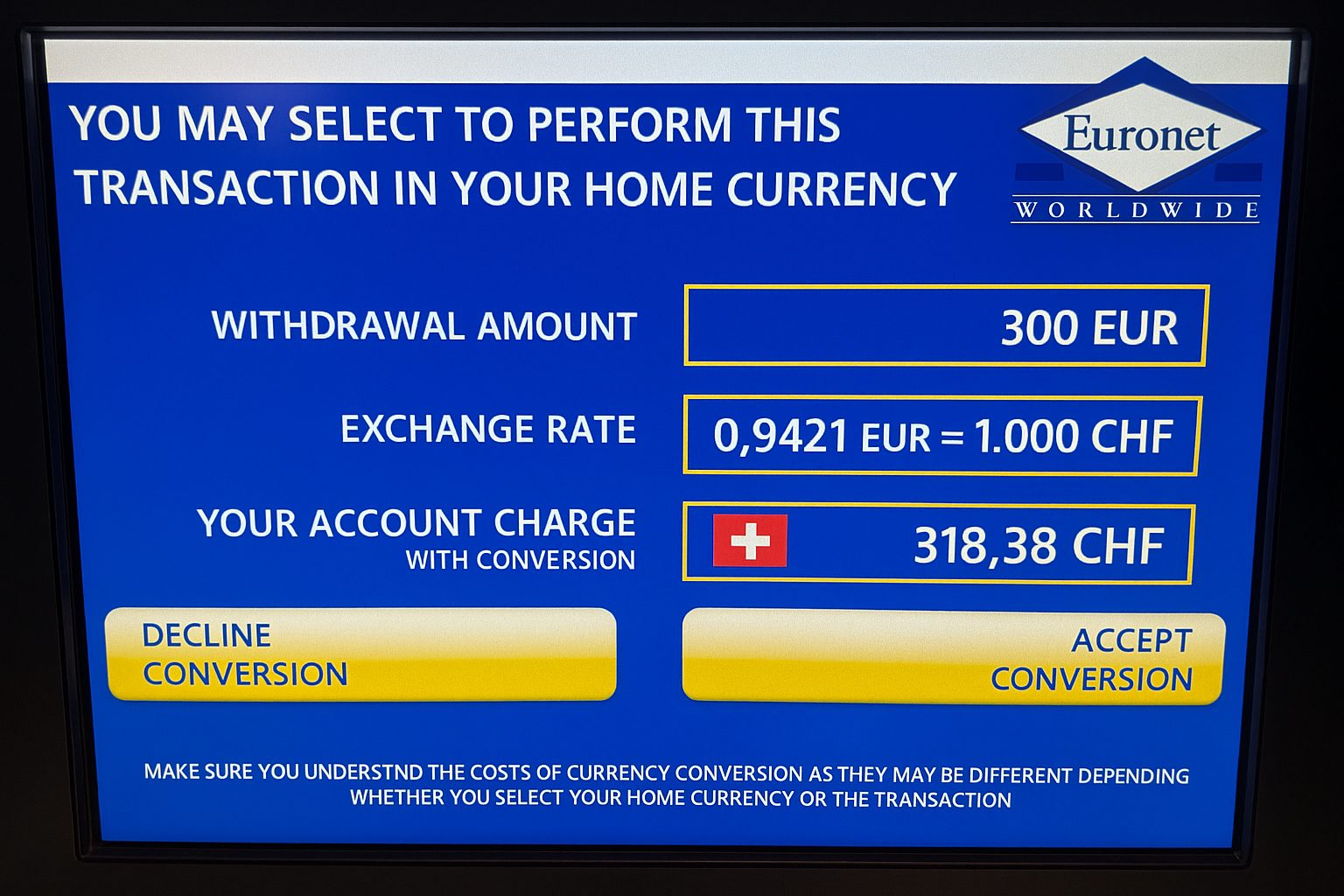
The ATM operator may also charge a fee. That has nothing to do with your card and isn’t covered by the allowances above.
The same goes for shops and restaurants: if the card terminal offers Swiss francs, pay in local currency anyway. If you need cash before you leave, my article on buying foreign cash shows your options in Switzerland.
Conclusion: the right card for abroad
“0% fee” alone doesn’t tell you whether a card is cheap abroad. The exchange rate, the conditions and how you use the card matter just as much. My recommendations:
- You want a real credit card without annual fee: Swisscard Visa for purchases. Cumulus if the points or the two withdrawals per year without a withdrawal fee matter to you.
- You want a Swiss account with a cheap debit card: Bank WIR top if you meet one of the conditions, otherwise Neon plus.
- You travel occasionally and pay mostly on weekdays: Revolut Standard as an add-on.
- You hold balances in several currencies or send money abroad: Wise.
Whichever card you pick: take a credit card as a backup and always pay in local currency abroad.